Photographing Motion by Maegan


A photograph is a representation of a certain point in time which transmits a story of that particular moment. As mesmerizing as still photography is, for this particular reason, capturing motion suggests further conveyance of these stories. Our given task was to show the works of everyday life through motion photography. We had the opportunity to play around with various objects and techniques that would make for exceptional motion photographs. Given that the settings, technique and composition of the shots were vastly different from the usual still photography we'd been used to, trial and error was required. Finally, we had gotten the hang of panning, stop motion, blurring to show motion and exagerrated movement. It was definitely a pleasurable experience to be pushed out of our comfort zone and into a more creative mentality that produced immensely fascinating shots.


Panning is essentially a technique of photographing motion by allowing your camera to follow the subject during movement. A great amount of trial and error was done to get the right shots because at first, the photos turned out either too blurry, not blurred enough or simply plain white. These problems root from having the subject and the camera move without accordance to each other. The shutter speed may be too slow for the speed of both the camera and the subject. The subject may be moving too fast, so could the camera which produces a picture that may be too blurry or all white.  It could also be too fast, combined with slow speed of camera movement which produces an almost still picture. We discovered that having the subject, panning of the camera and the shutter speed all in accordance to each other will definiteky create the best results which idealy, would have a focal point that is in focus with its background having a shallow depth of field, showing motion. Aside from this technique, we experimented with having our subject stay still while we pan the camera. More or less, almost the same results are acquired, still with the proper settings.


Capturing stop motion and exagerated movement are personal favourites of mine for two reasons: I found that the settings were not too hard to figure out and the subject and motion of the picture are not restricted in order to acquire a specific goal. Given that I shoot for sports a lot, I was very familiar with what type of settings were needed for fast moving subjects. Several attempts were needed to get the timing right between the subject and the shutter. This meant that we had to continuously move around which, I didn't mind, as we had a lot of fun. We shot with faster shutter speeds in order to catch as much of the movement as possible. With the right ISO and a wider aperture number, we were able to capture that perfect fraction of a second that provided for a fun photograph.


Obviously enough, this is not how a normal person holds a hula hoop around - this is an exageration. I tried as best as I could to contort my body in a way that would show hyperbolic movement which is essentially all that is needed to create a beautiful shot. Combined with somewhat the same settings from stop motion photography, awesome pictures will be produced.


As with panning, the objective of blurred motion photographs are to have a main focal point that is totally in focus while the motion can still be seen as a blur. Therefore, the concept of the settings are basically almost the same. There really isn't a set rule for blurred motion shots because it depends on the type of show you want. For a sharper photo, the aperture should be a wider hole, veering away from a shallow depth of field. The shutter speed should not be too fast, not too slow - just perfect enough for the desired type of shot. We also used these settings to use light in our photography wherein we were able to draw varying shapes, names, patterns, etc. Overall, I loved photographing motion because of the uniqueness that each shot possesses. It is like a new perspective of telling a story - a photo worth more than just a hundred words.


Photographing Motion by Kurt


This assignment allowed us to touch on how to capture motion in different ways and methods. We expressed motion through panning, capturing exaggerated movements, stopping motion, and blur to show motion. Capturing motion was difficult at first, but nonetheless it was a very fun experience.


Photographing Motion by Mary Sandoval


© Mary Sandoval 2018

Welcome Back. I present to you another amazing assignment for my GCT course on photographing motion. The purpose of this assignment as you already know is to capture motion, a technique that is precisely controlled of. The benefit of movement in a shot can be very small, slow or subtle. Examples of photographing motion is sports such as Volleyball or Basketball, fast moving objects like cars, or maybe even water dripping from a faucet.


Photographing Motion by Kyle

Within our grade 9 GCT class we were given an assignment to capture motion with our lens. To accomplish such a task we were required to accurately control our settings so we could capture motion in a number of ways such as panning, stopping motion, exaggerated motion, and blurring.Each of these methods required different settings which we had to manipulate along with our subjects to get the optimal shot. Motion is not just a mere photo but it is a story waiting to be told!

Method 1st is panning. The technique for panning involves moving your camera in the direction your subject is moving in. The final product should have your subject in focus and the background blurred to convey movement. In terms of settings it is optimal to have a relatively low shutter speed as you pan the camera. Bonus tips include using a tripod and/or flash to sharpen your subject.


Method 2nd is stopping motion. The technique for capturing stopping motion is to take a picture of your subject who is paused in the action of doing something. In terms of settings your camera should be set at continuous shooting and have a faster shutter speed. A tripod is highly recommended to keep your camera steady as you shoot your shot.


Method 3rd is exaggerated motion. The technique for capturing exaggerated motion is similar to that of stopping motion. The subject could either be paused in motion while expressing lots of emotion or the subject could be in the act of over exaggerating his/her body.


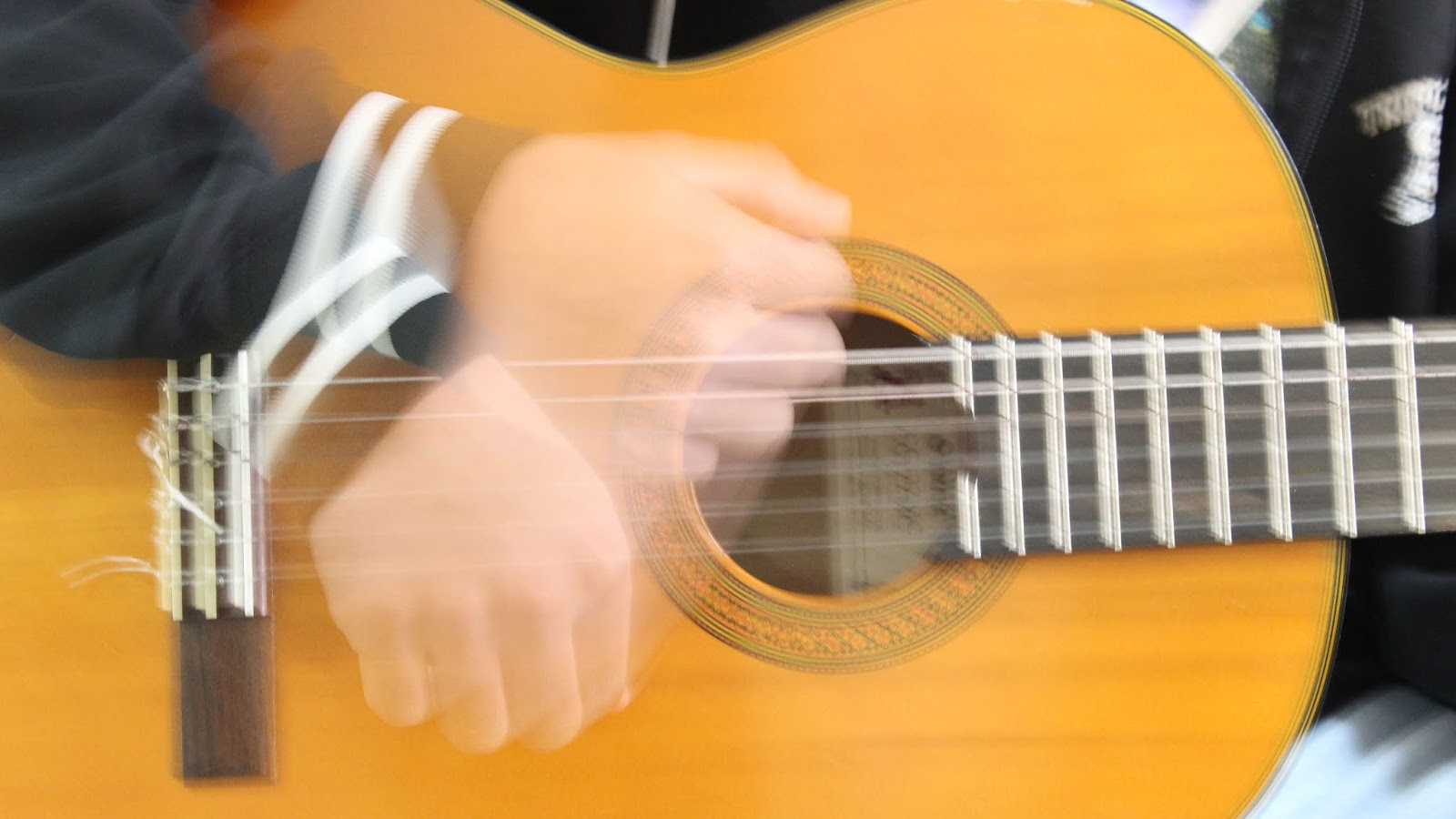
The 4th method is blurring. The technique for blurring is to a slow shutter speed to allow enough movement to occur when snapping the picture. The product is a blurred subject in motion.


/


Photographing Motion by Haya


The grade 9 GCT class was assigned to take pictures in motion. We were given time to experiment and play around with the settings of the camera during class. We took turns taking pictures in groups using colorful items to shoot in motion. Capturing motion wasn't easy and there are many different types of motion to capture like, panning, exaggerated motion, stop motion, or blurring the background to show motion. 


In this photo my friend Kiana is captured in motion while hula-hooping with four hula hoops. This type of photo is called stop motion. Stop motion is exactly like what it's called, a photo where you have stopped motion. For this photo our camera was put on burst or continuous shooting. When our camera was put on burst we looked through the photos to find one great picture with other unwanted ones.


This photo is featuring Waldo coming out of a locker. This type of photo is called blurred to show motion. For this picture we changed the setting of the camera to a slower shutter speed. This was one of the easier ways to caption motion. In this photo we also used a tripod to keep the camera from moving and adding any extra movement. 


This photo captures my friend Kiana riding a bike in the snow. In this photo the subject is in focus but the background is not. This type of photo is called panning. Panning was one of the more difficult photos we had to capture because we had to do it without a tripod. It shows a sense of speed the subject is going.


This photo it captures my friend Yana flipping her hair. This type of photo is called exaggerated motion. In exaggerated photos, the subject is caught in an unusual or awkward position exaggerating the actions she is doing. To do this you would need a slower shutter speed.


Compostion an Assignment in 3-9 Steps. Become an expert

Your next assignment is on Composition.  You will chose 3-9 of these to become familiar with.  Read up on his blog http://compositionstudy.com and watch the videos below. More to follow. This is a major assignment.  Getting started will help you get more done.

This entire series of videos is at http://compositionstudy.com/.  It is recommended that you head to this site to read up on each one of these Compositions Styles and Strategies.

Title Yourname Photographic Composition Post
Labels yourname, composition, Term 2, 

Your post needs to include a photo or photos in the body. A slidedeck with your photos

Your slidedeck needs to have a Title  Slide for each genre of composition, a notes slide talking about what that genre of composition is and a minimum of 3 images you have taken in that genre. So you need 5 slides per composition genre.

Due Tuesday January 15


Line
https://youtu.be/qGWYHimA8gQ


Shape
https://youtu.be/uKDObRUywhE


Simplification
https://youtu.be/lKc-0QEbZbo


Negative Space
https://youtu.be/lKc-0QEbZbo


Rule of Odds
https://youtu.be/n-1tq0FEBV4


Rule of Thirds
https://youtu.be/55d_n_zpSXo


Rule of Space
https://youtu.be/9KzR3a83FM0


Sub-framing
https://youtu.be/pLuclW9GFJM


Rhythm
https://youtu.be/gf6aSSpM-K0


Tempo
https://youtu.be/R5TDqYhlQvk


Photographing Motion by Colin

This GCT Assignment was on Capturing Motion and experimenting with different settings on our cameras to see how we could do so. The four different types of motion shots that we had to capture were Panning, Stopping Motion, Exaggerated Movement, and Blur to Show Movement. These shots all required different camera settings like aperture, ISOs, and shutter speeds.


This technique is called "Panning". Panning requires some versatility in order to capture a good shot. Panning is like moving with the subject to capture an interesting shot. I used a shutter speed of 1/21 of a second to capture this photo of me walking. The background is sort of blurred, yet the subject is quite clear.


This technique is called "Stopping Motion". It's like freezing time, and it makes for really interesting photos. Keeping the camera steady using a tripod is essential to taking a photo such as this one because having shaky and twitchy movement within the photo can cause some severe blurring and it could have the potential to ruin your shot. Shooting a shot like this requires high shutter speeds to completely freeze motion and a good ISO to have a clean photo.


The technique used within this photo is called "Exaggerated Movement". This is when the subject(s) of your photo exaggerate their movements to make it look as if something crazy is happening. In this picture a one student is performing an exaggerated crossover to get past his defender, and the defender is trying to lock the guard down. Their movements make for a really good photo.


The technique used within this photo is called "Blur to Show Movement". This technique is used to show a clear background while the subject is in a blurred state to show that they are moving while everything else stays completely still. Using a slower shutter speed can capture some really good photos that have nicely blurred movement like the blur seen in the photo above.


Here is my slide deck for Capturing Motion.