Francine Photographic Composition post


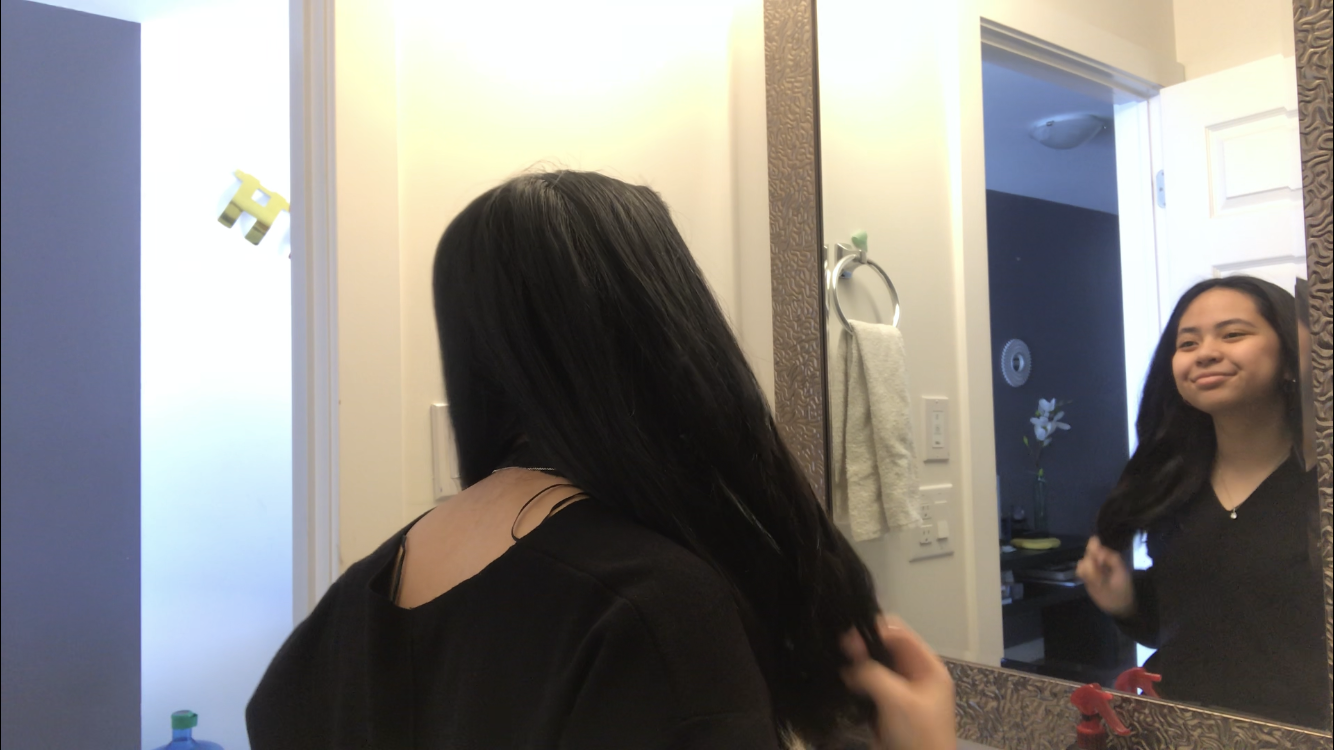


Shots and Angles Video Edition by Maegan


Cinematography is something that I personally have gotten into around 3 years ago in grade 7. Looking back, although my work was most definitely amateur and imperfect, I have established basic knowledge on various shots and angles using videos. As we initially delved into cinematography last term, I was able to expand my knowledge in order to create a 1 minute "how-to" video on curling hair. Through this process, I was able to discover more types of shots and angles such as the POV shot, the over the shoulder shot and the extreme close up. We were also introduced to 10 different kinds of shot sequences which I definitely enjoyed exploring. For my video, I was particularly fond of using the POV shot, Perspective Shift and Match on Reaction to portray a certain plot. It was very  tricky to achieve these shots because everything had to correspond to previous shots. If something was out of place, if the lighting wasn't the same or if I didn't execute the movement close enough to previous shots, the overall progression of the video would look odd. The video would also not have turned out if it weren't for editing which admittedly, was a bit of a bumpy process for me as I have never used Adobe Premier before. Nevertheless, this was an overall enjoyable experience and I have learned quite a lot regarding filming and editing. I hope to carry on what I've learned in the future videos I may create.


Shots and Angles the Video Edition by: Handrey


Photographic Composition Post By: Frans


Our class has been working on Composition to further improve our photography skills. Composition in photography can alter how you're taking your photos as you may want to consider the position you're in, reducing image components, and many more. We were allowed to pick 3 or 9 of the topics to be familiar with such as Line, Shape, Simplification, Negative Space, Rule Of Odds, Rule of Thirds, Rule Of Space, Sub-Framing, and Rhythm. We were showcased multiple videos about this topics which guided us on what type of pictures we wanted to take. It was a fruitful experience being able to take the photos, but additionally challenging.


Line helps guide the viewers eyes to the composition. It defines shapes and makes a statement. A tip when working with lines in photography, you might want to change your point of view. There are 5 types of lines, organic lines, diagonal lines, horizontal or vertical lines, and implied lines. Diagonal lines and organic lines are present in this shot from the wires.


Shape emphasizes lines in compositions. There are a plethora of techniques with shape like scale, cropping, fragmentation, focus, metaphor, and implied shape. I focused on scale in this shot, and by placing one of the vases in the back, it creates an illusion that one vase is bigger than the other. A vertical line fragments where the two vases meet up.


Simplification reduces an images component to what it necessary. There is more negative space since it allows the composition to breath. When working with simplification, take things out of the image that is not important to the subject of the picture. As you can see in the shot, there is a wide area of negative space. 


Negative Space is all about figure and ground relationship. Similar to simplification, negative space allows the subject to breath. Having a balance of high and low impact gives a natural and calming feeling to the viewers. In my shot, my composition is the tree branches, and the negative space is the sky. As you can see, there is minimal activity to my shot. 


Rule Of Odds is simply, a grouping of 3 subjects. It is more pleasing to the eye if there is an odd number of subjects in the shot, rather than an even one. Rule Of Odds suggests balance and harmony. In this composition, there are 3 strawberries. The 2 strawberries in the side brings balance to the middle strawberry.


Rule Of Thirds in composition is use to achieve balance. Imagine your shot was divided into 2 lines vertically and horizontally, the points where the lines intertwine is where you want to put your composition. There should be 4 compositions in your shot. The composition in my shot is the 2 cars, the roof, and the electric pole.


Rule Of Space implies action, creates a sense of motion. Incorporate negative space that will relate to the subject's movement. The viewer creates a conclusion for the subject. In this shot, my brother, is about to go up the stairs, which creates a sense of motion and conclusion.


Sub-Framing is a picture, within a picture. The picture is either enclosed in a shape or line to frame it. Sub-Framing creates contrast between 2 subjects. In my shot, the hole that leads to the slide, creates a picture within a picture.


Rhythm in composition, is a musical metaphor. There is a series of pattern like a rhythm. Syncopation is a rhythm that starts to pull against the main pulse, which in turn starts to make it feel less natural. My shot has syncopation since there is no pulse or pattern in the composition.

Justin Photographic Composition


My Class has been doing an assignment for the past couple weeks on taking photos for composition and learning about different types of composition. I picked 4 composition types and the photos are shown in the slide deck below. I chose the compositions Line, Shape, Sub Framing, and Rule of Odds because those seemed the most interesting to me and it seemed like the easiest compositions to take a photo of.


Colin Photographic Composition Post


Right before the Christmas Break, We were given an assignment on Composition in 3-9 steps. Those 9 ways were "Line", "Shape", "Simplification", "Negative Space", "Rule of Odds", "Rule Of Thirds" , "Rule of Space", "Sub-Framing", "Rhythm", and "Tempo". I chose Line, Negative Space, and Rule of Odds. Each of these techniques create very unique photos that have distinct features that can let you recognize which of the techniques is being used in the photo.


Shots and Angles the Video Edition


Here is what you need in your Slide Deck

Define the following


 Video concepts and what they are good for.


\


Storyboard for Video