In this assignment, we learned all about composition. We learned 9 types, line, shape, simplification, negative space, rule of odds, rule of thirds, rule of space, sub-framing and rhythm. Composition taught me how to organize and balance my images. We were given 3-9 to choose from and capture images for them. This assignment, I really had to be patient because it was hard planning pictures. To show our work, we put our images in a slide deck, with the definitions of what we picked along with at least 3 pictures for each one. I learnt that composition was very hard to deal with but if you put effort into this, I bet it would create a great image.
r
In this assignment, we were given the task of capturing motion using much different technique's. Panning, Blur to Stop Motion, Exaggerated Movement and Stopping Motion. Capturing movement in images is something we don't see in most pictures being published, we don't see a part of the image before or after it was taken. I learned that with such little or exaggerated movement can change the perspective of the image. Each of these images came more alive and added a sense of dimension compared to images that we normally shoot. Throughout this assignment, we had to take notice of these camera's settings, shutter speed, f-stop, and iso. Every time we took a picture we had to continually change the settings based on the lighting and how we wanted the motion to be captured. we also were fortunate enough to be provided tripods for a better stable and secure platform. The tripod reduced any shakiness that our hands will cause.
This image is an example of a Blur To Show Image. In this image, we were challenged to show the movement of the image within one shot. In this shot the main focal point is still in focus; the hand while the background is blurred and lit up with a tungsten light mimicking the movement of the photo. This shot was very tricky to shoot, I myself wasn't comfortable with this kind of shots. The setting of this shot varied on what type of blur of the movement you want to show. For a sharper image, the aperture of the shot should be a wider hole (higher f-stop number). Limiting the amount of light being let in causing it to blur the background while still in focus with the subject. In this photo, a slow shutter speed was also essential to get this type of result.
This imaged is an example of a Stop Motion image. This image was really exciting and fun for me, we were given a large range of options to capture this image. This kind of image capture a moment of time when the ball midair seemed to be floating after being thrown up. I was more comfortable with this type of image, for I learned and shot similar photos like these from shooting sports recently. For this picture, it was necessary to change your camera's setting to shooting multiple frames continuously to capture images similar to this. It was also necessary that you have a fast shutter speed.
This picture of my lovely friend Maegan playing with a hula hoop and is an example of an Exaggerated Movement. This type of image portrayed expressions through actions made by the subject. Examples of Exaggerated Movement can be expressed and shown in many different ways. The actions in the photo set the feeling an ambiance of the image. This image was easier to shoot than the other ones. We did not have to as much change the settings regularly. Although this image needed the camera to be set to shoot multiple frames to capture moments like this.
These pictures of a snowman walking in front of a christmas treee is an example of Panning.
A focused subject and a blurred backround is a necessity to be able to complete a shot similar to this. It took many attemts to capture this pictures, attemps like getting my hamster to be my subject. Most of the photos i took were either too blury or the subject wasnt focused at all. The subject can go in many diffirent speed and your camera should be able to go with it. Examples of shots you will usually see is with Racecar photographers who capture beast machines going hundeds of miles per hour. It was necessary to use a good stable platform and for you to be able to move the camera quicklu along with it.
This assignment tested our abilities on tuning and tweaking our settings to capture motion in different types of shots. Panning, Stopping Motion, Exaggerated Motion, and Blur to show Motion are the types of shots assigned to us. Each of these shots required quite a bit of tuning and creativity of the composer. We as a group had some complications, in the beginning, manipulating our settings according to the type of shot and as we progressed we had an idea on the settings required for the various shots.

This type of shot is referred to as Panning. Panning focuses on a moving target and creates that as the focal point and makes the background out of focus. It requires vigorous movement varying on the speed of the moving target. This shot focuses on the shirt of the model and blurs out the background though showing the motion in which the camera moved to capture the moving target. The optimal shutter speed for panning is varied on the speed of the moving target, if your target is fairly slow you may use a low shutter and if your target is very fast it`ll require a fast shutter speed.
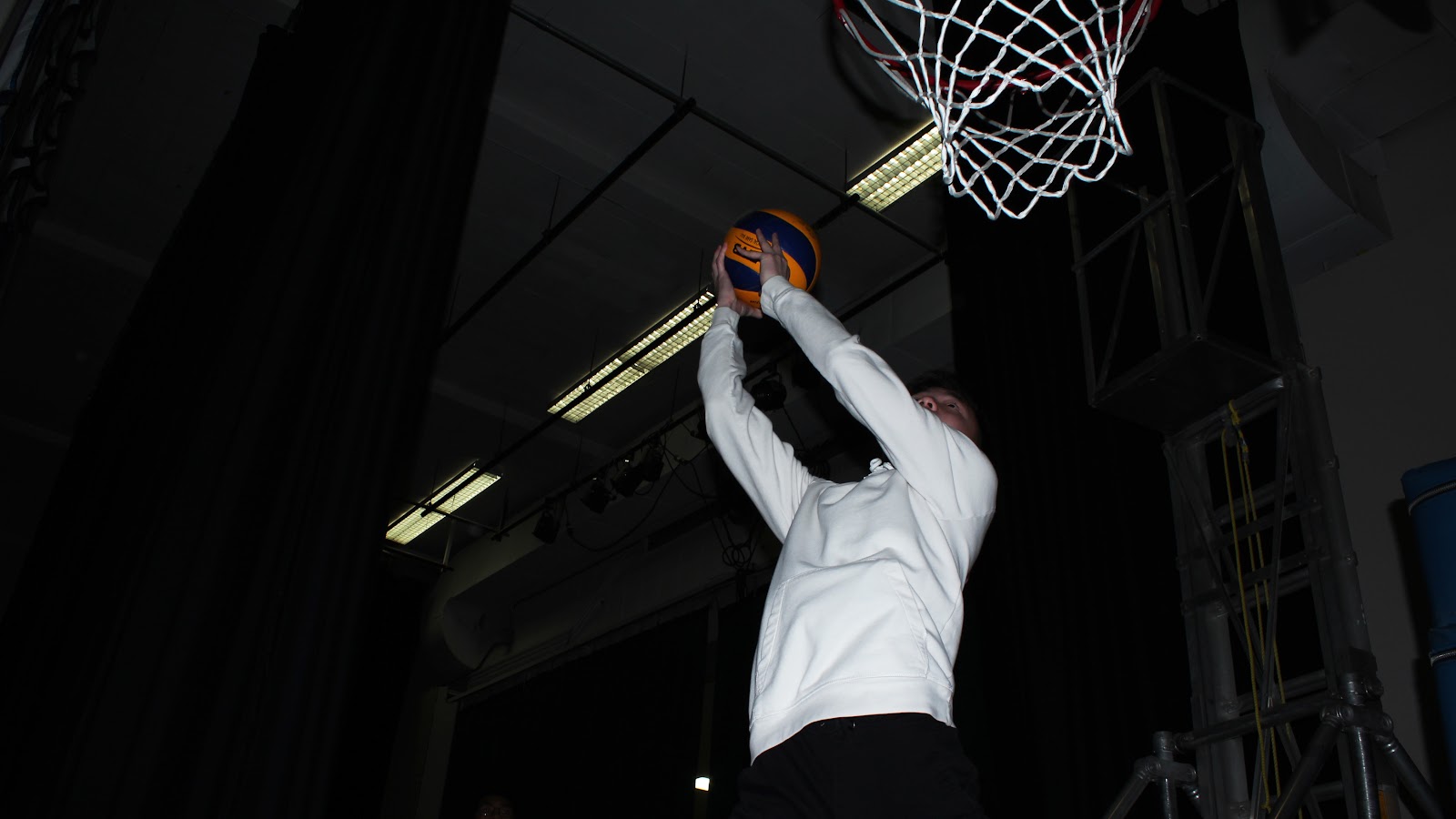
This type of shot is referred to as Stop Motion. Stop Motion is where a moment of motion is frozen and captured. As you can see the model in the picture is captured in the air right before finishing the dunk. Tips you can use to take a stop motion is you can have flash which is optional, you can also use a tripod, but most importantly having a very high shutter-speed would be optimal to taking stop motion.
This shot is called a Blur to show Motion shot. Blur to show Motion is self-explanatory according to the name its self. In this picture, the two models are seen while another model is running around them shown by the trail of a white blur. An optimal shutter speed for taking this type of shot is having a low shutter-speed and using a tripod to keep the background in focus while the moving subjects can be distinguished in the picture.


